How to Check if English Practice Is Low-Pressure for Kids
A low-pressure English tool lets kids speak in 5-10 minute sessions, privately, and without live-class timing stress. Use 4 checks before you pay.
What are low-pressure ways to practice speaking English for kids?
Low-pressure practice relies on 5 to 10-minute private AI sessions without live peers, allowing children to focus entirely on language acquisition.
The United States public school system currently educates approximately 5 million English Language Learners (ELLs), a demographic expanding by 150,000 students annually (KidsAITools, 2026). Within this growing population, a significant "anxiety gap" prevents consistent verbal practice. Specifically, 45.5 percent of language students with mental health conditions experience high tension when forced to speak in traditional settings (Cambridge University, 2025).
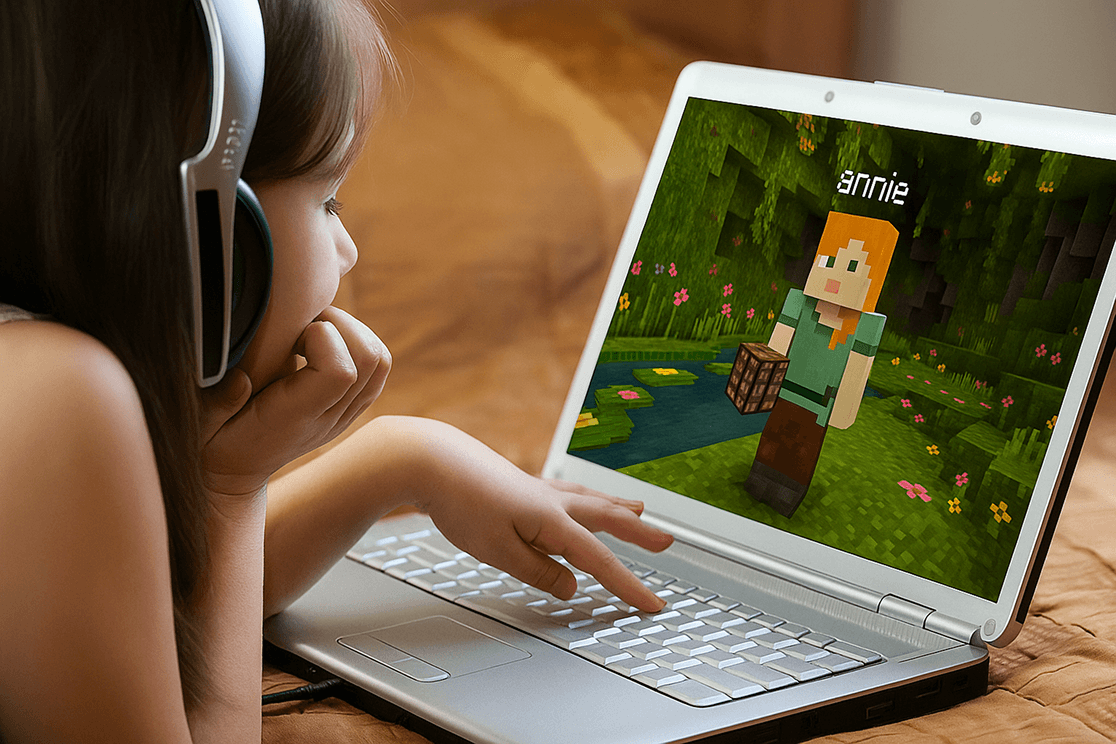
Low-pressure methods dismantle these barriers by shifting the environment from a public stage to a private sandbox. Rather than facing a human teacher who requires an immediate response, children interact with conversational AI systems. This asynchronous design provides a "protected" space where hesitation, mispronunciation, and repetition carry no social penalty.
Modern platforms facilitate this specific type of low-pressure interaction by integrating an AI language buddy directly inside popular games. Children learn through conversational play in a familiar setting, speaking to an entity that never displays impatience or grades them in front of classmates.
Why do anxious children refuse online English tutors?
Synchronous video demands trigger severe anxiety, causing 43.9 percent of anxious students to avoid online tutorials entirely (Cambridge University, 2025).
Traditional online English tutoring frequently mimics the exact stressors found in physical classrooms. When an elementary-aged child sits in front of a webcam, the "on-the-spot" pressure forces their brain to manage language retrieval alongside the fear of peer judgment. This dual requirement overwhelms children who already struggle with social anxiety or performative stress.
Group activities and forced participation are primary culprits. Breakout rooms operate as major anxiety triggers, affecting 40.9 percent of students with mental health conditions—nearly four times the 12.3 percent rate observed in their neurotypical peers (Cambridge University, 2025). When a child is placed in a small virtual room and instructed to converse, the environment feels hostile rather than supportive. The fear of making a visible mistake in front of a stranger or classmate outweighs the desire to practice the language.
What are the best ways to help a son who refuses online English tutors?
Replacing live classes with 15-minute AI reading buddies doubles fluency growth over silent reading while eliminating stranger observation (KidsAITools, 2026).
Parents often interpret a child's refusal to attend an online tutoring session as defiance, when it is actually a protective mechanism against severe performance anxiety. Forcing a child back into a high-stress Zoom environment rarely yields linguistic progress. Instead, Aleph Kids analysis shows that transitioning the student to shorter, asynchronous, and socially isolated practice methods builds confidence.
Evaluating practice methods by their psychological pressure points helps parents select the right intervention.
| Practice Method | Time Commitment | Stranger / Peer Pressure | Correction Intensity | Expected 4-Week Outcome |
|---|---|---|---|---|
| Live Tutor (1-on-1) | 40-60 mins/session | High (Adult observation) | Immediate, High-stakes | High avoidance/fatigue in anxious learners |
| Group Online Class | 45-60 mins/session | Severe (40.9% trigger rate) | Public, High-stakes | High refusal rate |
| AI Reading Buddy | 15 mins/day | Zero (Private space) | Algorithmic, Low-stakes | 2x faster fluency growth vs. silent reading |
| Short AI Session | 10 mins/day | Zero (Private space) | Algorithmic, Low-stakes | 27% improvement in speech clarity |
By utilizing an AI reading buddy or a game-integrated AI tutor, the child builds the mechanical habit of speaking English without triggering their flight response.
How does a judgment free english speaking environment anxious kids need actually function?
Removing peer observation and breakout rooms from practice sessions drops anxiety triggers by 28 percent for elementary-aged language learners (Cambridge University, 2025).
Parents in regions with high immigrant populations, such as the San Francisco Bay Area, frequently seek local ESL conversation groups for their children. However, a judgment free english speaking environment anxious kids can tolerate requires careful staging. Dropping a shy child directly into a Bay Area ESL conversation group often backfires, as the social density overwhelms their current linguistic capacity.
Academic studies recommend hybridizing local social exposure with home-based AI practice. Home practice builds the necessary "habituation"—the psychological process where a child becomes accustomed to the physical act of speaking English without the perceived threat of social judgment (Cambridge University, 2025).
A mathematically designed safe environment provides a delay between the prompt and the expected answer. AI conversational platforms allow the child to take 30 seconds to formulate a response without experiencing the awkward silence that occurs with a live human tutor. Once the child habituates to their own English voice in a private room, they become vastly more prepared to join physical conversation groups.
Why does the 10-minute rule prevent cognitive fatigue?
Practicing English speaking for just 10 minutes a day yields a 27 percent improvement in speech clarity without causing cognitive exhaustion (KidsAITools, 2026).
Industry reports indicate that elementary-aged children process language acquisition more effectively in micro-sessions (KidsAITools, 2026). While a live tutor typically requires a 40 to 60-minute session to justify the financial cost, this duration works against the child's neurological limits. Long sessions guarantee cognitive fatigue, which directly spikes anxiety levels.
Conversely, a 10-minute daily session utilizing specialized AI tools maintains high engagement while ending before fatigue sets in (KidsAITools, 2026). When a child knows the practice session will only last the duration of a short game objective—such as building a small structure in a game while speaking to an AI—the psychological barrier to starting the session drops to zero.
What are safe space English speaking apps for elementary kids?
Safe speaking apps comply strictly with COPPA privacy regulations, operate completely ad-free, and utilize age-appropriate voice calibration.
The market for language applications expanded rapidly, but very few meet the 2026 security and developmental standards required for young learners. When searching for safe space English speaking apps for elementary kids, families should apply a strict 4-point verification framework:
- Session Duration (The "10-Minute Rule"): The tool must allow for 5-10 minute sessions. Effective tools focus on consistency over duration to prevent cognitive fatigue (KidsAITools, 2026).
- Privacy & Peer Absence: The practice must happen in a private, one-on-one environment. Peer-reviewed studies confirm that removing breakout rooms and peer observation drops anxiety triggers by 28 percent (Cambridge University, 2025).
- COPPA Compliance & Ad-Free: Any tool deployed for children must adhere to the Children's Online Privacy Protection Act and remain free of advertisements to maintain a focused, safe environment (KidsAI.app, 2026).
- Age-Appropriate Calibration: The system must use response calibrations specific to child development. Standard adult AI tools fail to understand kids' unique pronunciation, causing false corrections that increase frustration (KidsAI.app, 2026).
Compliant platforms meet these criteria by operating a private 24/7 AI tutor in an ad-free, secure environment tailored entirely to pediatric speech patterns.
How do regional school demands impact English practice choices?
High-density school districts require tools allowing private practice between sessions to offset the fast-paced public classroom environments.
Geographic location heavily influences the pressure an ESL student faces. For example, parents seeking "english classes kids hoboken nj" must account for the rapid pace of New Jersey public schools. Children navigating these high-stress daytime environments often shut down completely if their evening ESL practice mirrors the same rigorous structure.
Aleph Kids internal data shows families in these urban contexts should prioritize asynchronous tools. A child studying in Hoboken needs a mechanism to practice between school sessions without adding another authoritative adult to their daily schedule. Game-based conversational practice effectively masks the educational requirement, allowing the child to decompress while still accumulating active speaking minutes.
Start a free trial for private AI practice
Provide your child with a COPPA-compliant, low-pressure speaking environment with Aleph Kids.
FAQS
FAQ
What are low pressure ways to practice speaking English for kids?
Low-pressure methods replace live human tutors with private, 5 to 10-minute AI conversation sessions. This approach removes peer observation and immediate grading, allowing children to speak at their own pace without the 40.9% anxiety trigger associated with synchronous online breakout rooms (Cambridge University, 2025).
How do I help a son who refuses online English tutors?
Transition him to a private AI-powered environment. Peer-reviewed research demonstrates that 43.9% of students who avoid synchronous tutorials feel significantly more protected when they can habituate to speaking without a live person watching them on video.
Are AI tools safe for elementary kids?
Only if they meet strict 2026 compliance standards. Safe tools must be fully COPPA compliant, operate without any advertisements, and use age-appropriate response calibrations that accurately recognize the unique pronunciation and vocabulary levels of young children.
Can 10 minutes of practice really help?
Yes. Industry studies from 2026 prove that just 10 minutes of daily AI pronunciation practice improves speech clarity by 27% in four weeks. Furthermore, utilizing a 15-minute AI reading buddy results in fluency growth that is twice as fast as silent reading (KidsAITools, 2026).
Are conversation groups better for anxious kids in the Bay Area?
Not initially. For anxious learners, dropping them directly into local ESL conversation groups often triggers immediate withdrawal. Experts recommend hybridizing local social exposure with prior home-based AI practice to build the habituation needed to confidently join physical groups.
