How Many Minutes of Speaking per Day Do Kids Need for English?
A research-based guide to daily speaking minutes for children learning English, with age bands, realistic goals, and what counts as real speaking practice.
TL;DR
The optimal amount of daily English speaking practice depends heavily on a child's current proficiency, scaling from 15–20 minutes for true beginners up to 60–135 minutes for academic learners. Students can reach intermediate B1 fluency in approximately 18 months at a study pace of five hours per week.
Ideal daily speaking time for beginners
Beginners require 15 to 20 minutes of daily speaking practice, prioritizing a 90 percent listening and 10 percent speaking ratio over six months.
The first 0 to 6 months of a child's language learning journey are known as the "silent period." Dr. Sarah Mitchell, Associate Professor of Human Development and Family Science, notes:
"During this highly sensitive phase, forcing a child to speak extensively can create anxiety and associate language learning with stress."
This 90/10 ratio allows the child's brain to naturally absorb the rhythm, intonation, and phonemic structure of English before they are expected to produce it themselves. Instead of demanding long, complex conversations, parents should aim for just 15 to 20 minutes of gentle, low-pressure vocalization each day. To help build these early, stress-free habits, implementing a structured 15-minute speaking routine can safely manage this 10% output phase without causing cognitive overload.
Speaking practice for intermediate learners
Intermediate learners should practice speaking for 30 to 45 minutes daily, shifting their study balance to 70 percent input and 30 percent output.
Once a child crosses the six-month milestone and has built a foundational vocabulary, relying solely on listening is no longer sufficient to drive progress. At this developmental stage, 30 to 45 minutes of daily, active speaking practice becomes the standard benchmark. This increased duration provides the necessary runway for children to experiment with more complex sentence structures, conjugate verbs in real time, and develop genuine conversational fluency. Because this phase requires significantly more active verbal engagement, parents comparing digital learning tools must ensure the platform genuinely demands vocal production. Reviewing English speaking apps for game-loving kids can help identify tools that prevent kids from slipping back into passive swiping and watching.
Why the 20-minute daily burst method is more effective
Consistent 20-minute daily speaking sessions dramatically improve memory consolidation and learning efficiency compared to intensive weekly classes.
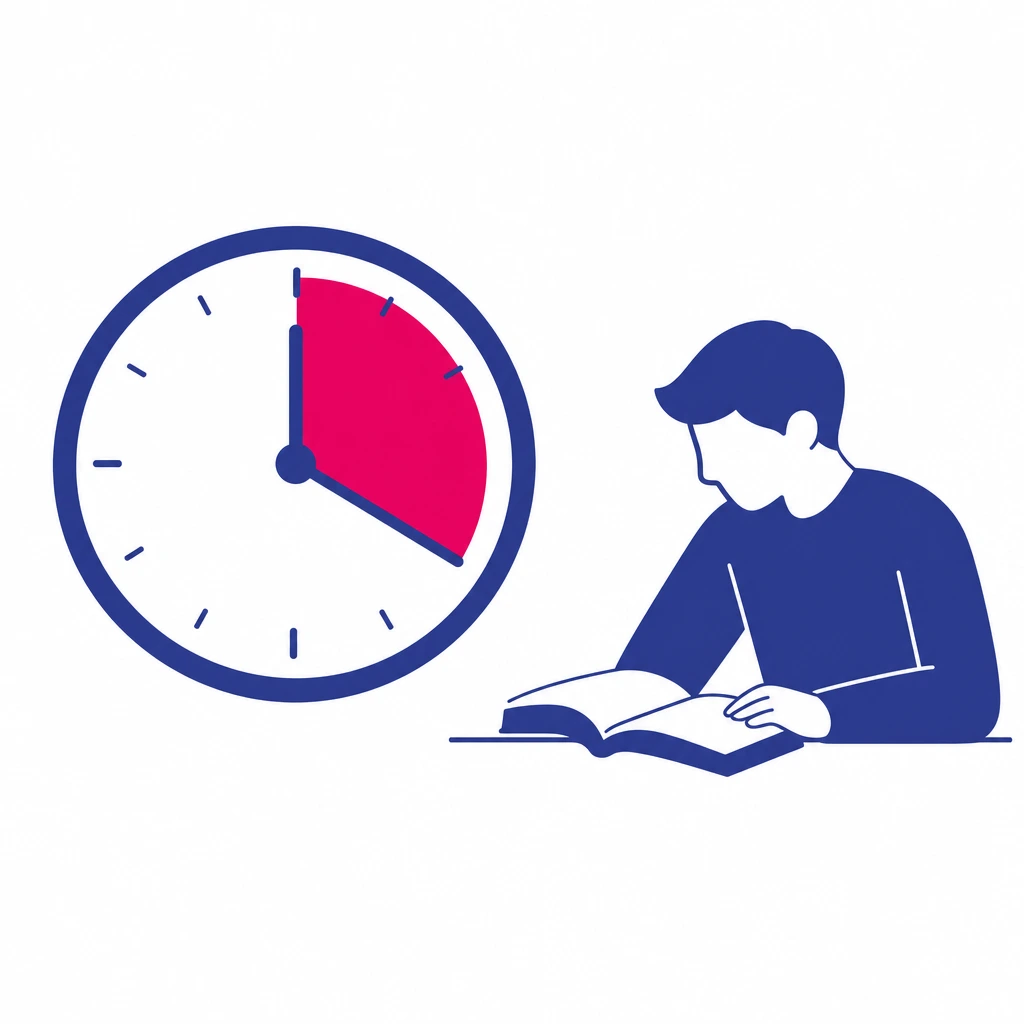
When scheduling language practice for children, frequency significantly outperforms intensity. Learning efficiency skyrockets when children engage in focused 20-minute daily bursts rather than sitting through exhausting, three-hour weekly marathon sessions.
The science behind this is rooted in how a young brain consolidates memory. Language acquisition is highly akin to physical exercise; neural pathways grow stronger through daily, manageable repetition rather than a single day of severe cognitive strain. A single, prolonged weekend tutoring session often leads to cognitive fatigue after the first 45 minutes. Conversely, short, 20-minute daily bursts perfectly match a young child's natural attention span, ensuring that every minute spent speaking is a minute of high focus and maximum retention.
State educational standards for daily English support
State educational guidelines recommend that English language learners at the entering proficiency level receive 60 to 135 minutes of daily support.
While home-based learning thrives on 20-minute bursts, formal academic environments require a much higher volume of structured English exposure. Montana state guidelines recommend that students at the Entering level receive 60 to 135 minutes of daily English Language Development support. Furthermore, foundational regulations like the New York State Standards dictate that students at both the "Entering" and "Emerging" levels require a strict minimum of 360 minutes of instructional time per week.
Reaching intermediate fluency
Children typically need 350 to 400 cumulative hours of study to reach B1 intermediate proficiency, achievable in 18 months with five weekly hours.
In international language learning, the B1 level represents a major milestone where a child can comfortably hold a conversation, express distinct opinions, and describe past events independently. To reach this highly desired B1 intermediate proficiency, a child typically requires between 350 and 400 cumulative hours of dedicated study and active speaking practice. At a consistent pace of 5 hours per week (roughly 40 to 45 minutes a day), this 350-hour milestone is entirely reachable in approximately 18 months.

Integrating English speaking into daily habits
Combining casual home habits like dinnertime conversations and interactive bedtime reading provides 30 to 40 minutes of effective English exposure.
Accumulating 45 minutes of daily practice does not mean a child must sit silently at a desk with a grammar textbook. By weaving English into everyday household routines, parents can easily generate both passive and active language exposure. Simple habits—such as asking the child to describe their day in English during dinner, naming items together in the grocery store, or engaging in interactive dialogue during bedtime reading—can naturally provide children with 30 to 40 minutes of highly effective English exposure daily. For families who rely on technology, understanding how to use AI safely for speaking practice can add an extra 15 minutes of highly interactive, conversational output to the evening routine.
Optimal schedule for online speaking sessions
The optimal schedule for live online English speaking sessions is 15 to 30 minutes conducted two to three times per week for maximum confidence.
For families supplementing home habits with external instruction or digital platforms, optimizing the exact length and frequency of online sessions is vital. Prolonged virtual classes often lead to intense screen fatigue. A targeted cadence of 15 to 30 minute live speaking sessions, conducted 2 to 3 times per week, perfectly prevents burnout while maintaining a high density of active vocal output. When evaluating these options, exploring an AI English teacher vs. traditional tutor checklist can help parents quickly decide which digital medium best facilitates these high-impact 30-minute windows.
Daily speaking targets by learner level
A structured daily speaking plan scales from 15 minutes for beginners to over 60 minutes for school-aged academic learners to guarantee progress.
| Learner Level | Recommended Daily Minutes | Focus & Output Ratio |
|---|---|---|
| Beginner (0-6 months) | 15–20 mins (Daily) | 90% Input / 10% Output |
| Intermediate (6mo-2 years) | 30–45 mins (Daily) | 70% Input / 30% Output |
| School-Aged (Academic) | 60–135 mins (Daily) | Full Language Development Support |
| Online Tutoring | 15–30 mins (2-3x/week) | Confidence & Fluency Building |
Before committing to expensive digital tools to help hit these daily markers, consult an English speaking app checklist to ensure the software actually tracks spoken minutes.
Frequently Asked Questions
Can my child practice speaking English for too long?
Yes. Short, 20-minute daily bursts are scientifically proven to be more effective for memory retention than prolonged, exhausting study blocks.
Does repeating after a video count as speaking practice?
Repeating phrases, also known as shadowing, is a fantastic form of output for absolute beginners in their first six months. However, as children transition to the intermediate level, they must engage in active output—spontaneously creating their own sentences—to build true conversational fluency.
What if we skip a day of speaking practice?
Missing a single day will not derail a child's long-term progress. However, consistency is the key to reaching the 350 to 400 total hours required for intermediate fluency. Try to supplement a missed formal study day with low-pressure passive exposure, like reading an English book before bed or listening to an English song in the car.
How do I know if my child is reaching their daily minute goals?
Focus on cumulative daily exposure rather than running a strict timer. If your child engages in a 15-minute interactive app session and spends another 15 minutes discussing a picture book or naming objects around the house, they have successfully met a 30-minute daily goal. Natural integration counts just as much as formal study.
How Aleph Kids supports optimal speaking dosage
Aleph Kids designs structured, bite-sized speaking opportunities that align with research-backed daily minute targets to maximize verbal confidence. By prioritizing high-quality, interactive vocal output, our platform ensures that children spend their allocated screen time actively communicating rather than passively consuming content.
We provide the precise, scientifically backed speaking dosage your child needs to reach the 350-hour B1 fluency milestone confidently, safely, and enjoyably.